


Do you want a high dividend paying stock or a stock with a quickly rising price?
Here at The Wealth Group, we want to have our cake and eat it, too. We’ll take some dividends, but mostly we want share price appreciation. The combination of dividends (or interest, in the case of bonds) plus share price appreciation equals total return.
To illustrate the principle of total return investing vs. income-focused investing, consider two heavyweight companies, Nvidia (the leading tech/AI name globally), and JPMorgan Chase, the world’s largest bank.
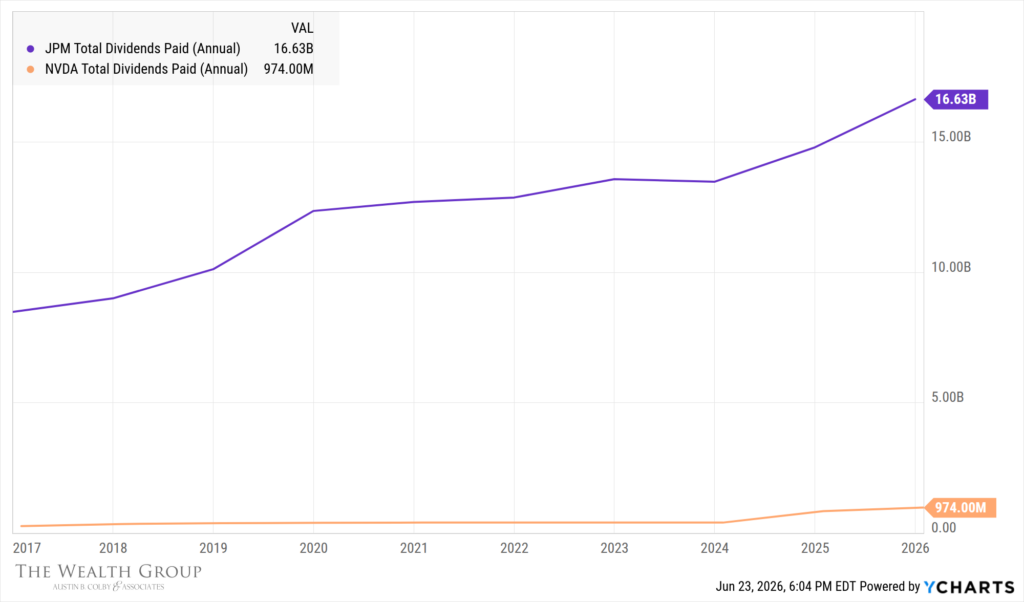
In the past 10 years, JPMorgan Chase stock has paid out $16.6 billion worth of dividends, while Nvidia has paid out just $974 million of total dividends.
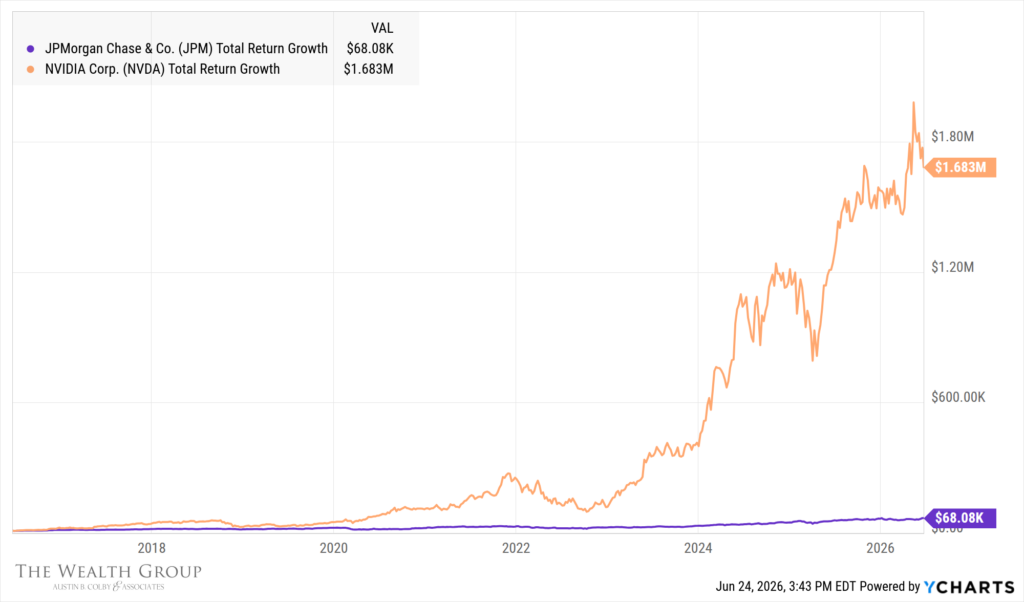
But the dividends are only a small part of the story. Investing $10,000 in NVDA stock 10 years ago would be worth $1,683,000 today, whereas $10,000 in JPM would “only” be worth $68,080 today.
At The Wealth Group, we are not opposed to investing in dividend-paying stocks, but it’s important to note that most growth-focused stocks (such as technology stocks) tend to pay meager dividends.
So if you set out to invest in high dividend stocks, you may find yourself underinvested in technology stocks.
A quick word on Apple’s native Stocks native app
As an application point for this principle of total return investing, look at how the Stocks app reports the 5-year performance of a mutual fund we have been using for some of our clients (as a tool for diversifying and reducing risk in a portfolio).
According to this Apple app, the BDMIX fund has returned 35.15% over the past 5 years.
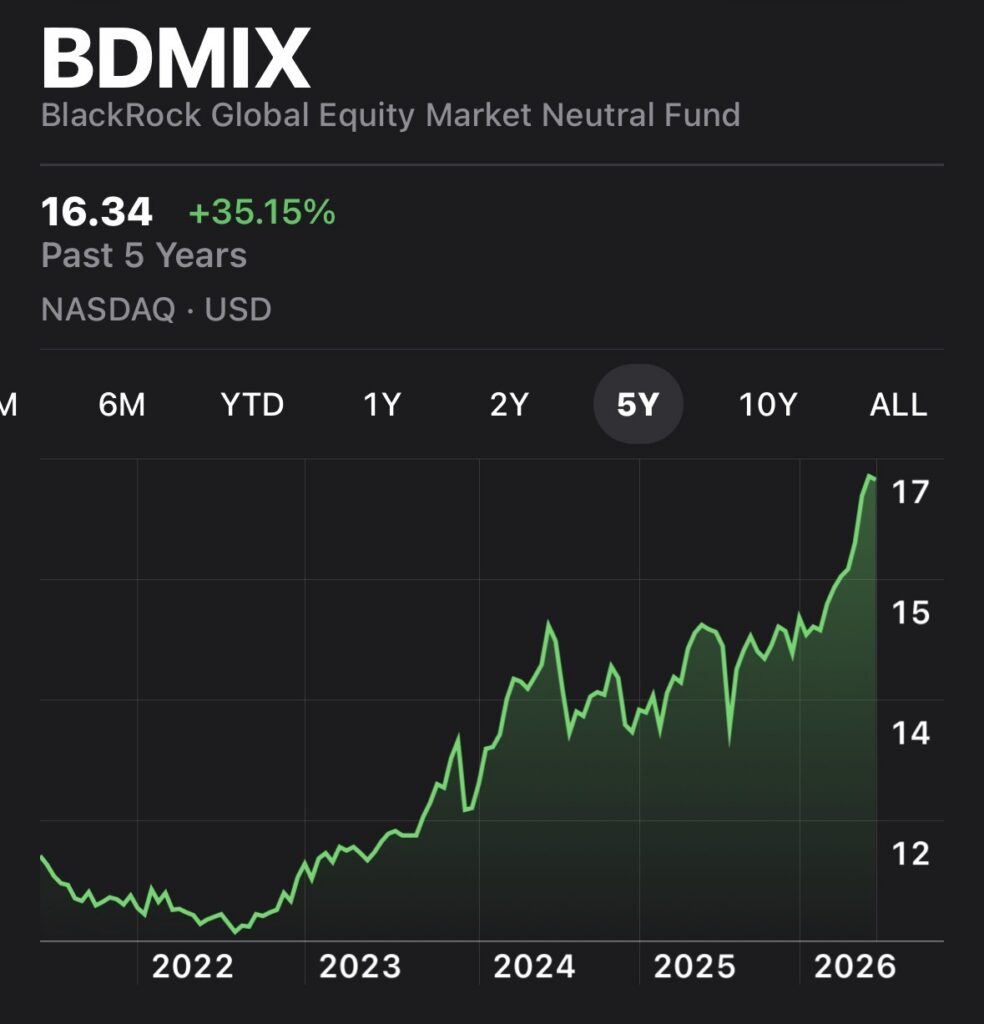
Being up 35% is not bad, but it’s not the actual [total] return of this fund. The 35% figure is the share price appreciation of the fund, but it does not account for income payouts in the fund (which have been substantial).
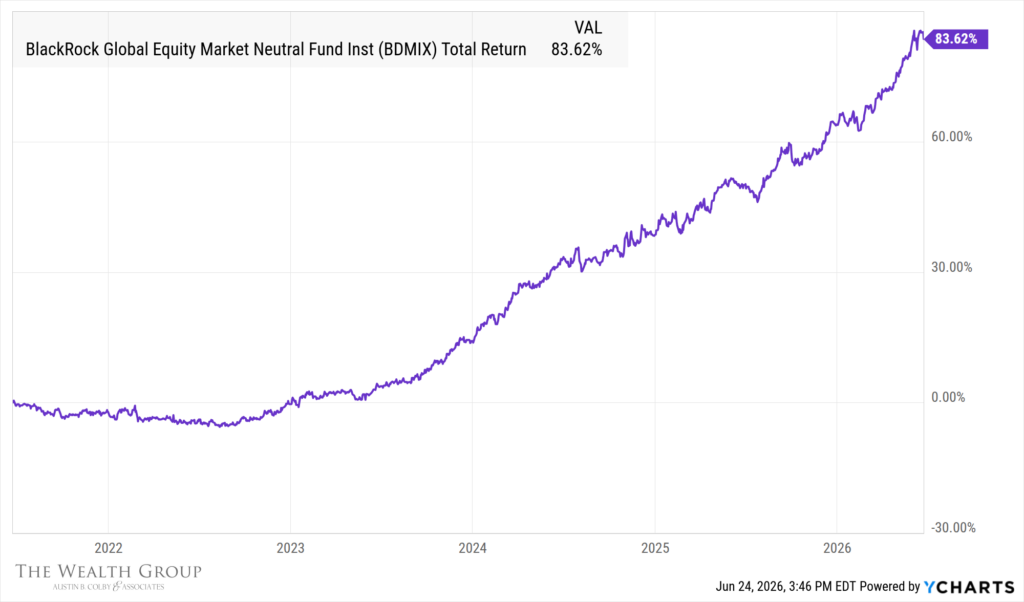
The total return of this fund is nearly 84% over the past 5 years. This 84% rate of return assumes you take the income payments and reinvest them into the fund.
What does this mean to you, our client?
Our primary objective is to help our clients achieve the highest risk-adjusted total returns possible. Because no investment or market is a sure thing, we believe in the value of diversification rather than concentrating too heavily in any one investment.
Investment income can play an important role—particularly in retirement, when it can help supplement other income sources. However, our focus extends beyond dividends or interest alone. We evaluate every investment based on its potential total return, while carefully considering the level of risk required to achieve that return.