


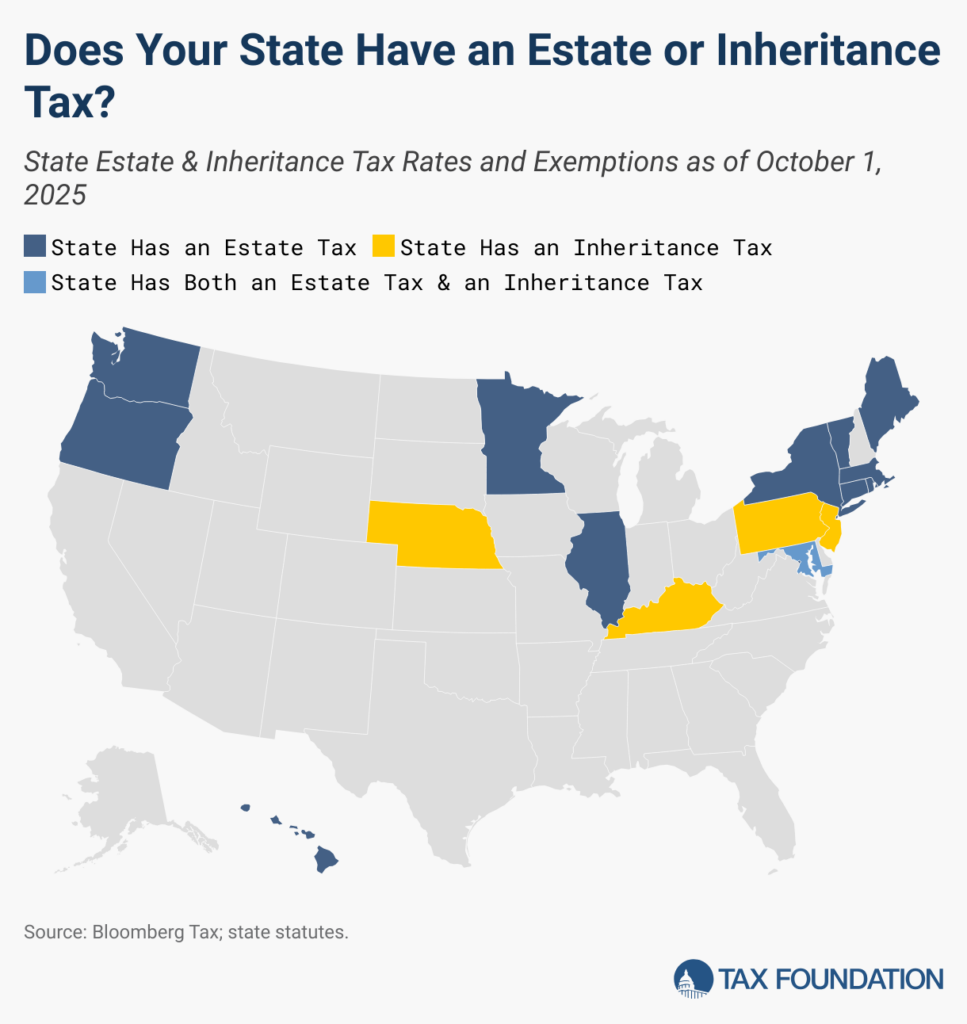
Minnesota is one of 17 states in the US that has either an estate or inheritance tax. With proper estate planning in place before either spouse dies*, a married couple in Minnesota can pass on $6,000,000 ($3,000,000 per spouse) to their beneficiaries without estate tax. Above that threshold, the tax rate starts at 13% and climbs up to 16%.
Any charitable bequests at death do not count toward the $6M limit (the charitable bequests go out tax-free).
For our higher net worth Minnesota-based clients, we have regular, proactive conversations about how to strategically minimize their expected estate tax burden.
One of our favorite (and simple) tools to reduce future estate taxes is having our clients gift appreciated stock funds to their children and grandchildren. These gifts are tax-free exchanges (if kept under annual gift tax limits), and the child or grandchild typically keeps the money invested for their own future needs and wants (i.e., the gift money isn’t spent on a new Ferrari).
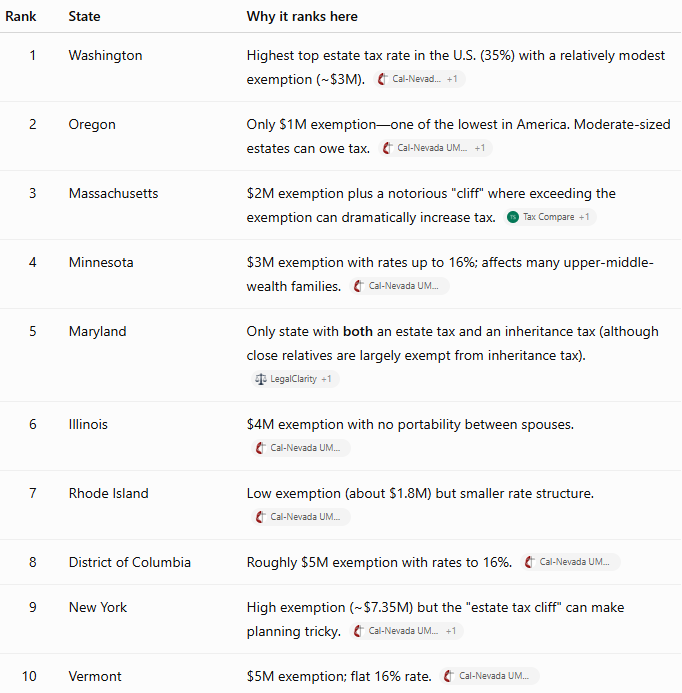
I asked ChatGPT to rank the state-level estate taxes from most onerous to least onerous (I regret to inform you that our home state of Minnesota has the 4th-worst estate tax in these United States):
Fast Facts on Minnesota Estate Tax & Population Metrics
- For fiscal year 2025, the state collected $360 million in estate tax receipts.
- This represents about 1.1% of the tax collection by the state for 2025 ($32 billion in approximate tax receipts).
- It is estimated that between 1 – 1.5% of Minnesota households have a net worth greater than $6M.
- The limit of $3M per person is not inflation-adjusted (it’s fixed at $3M for now).
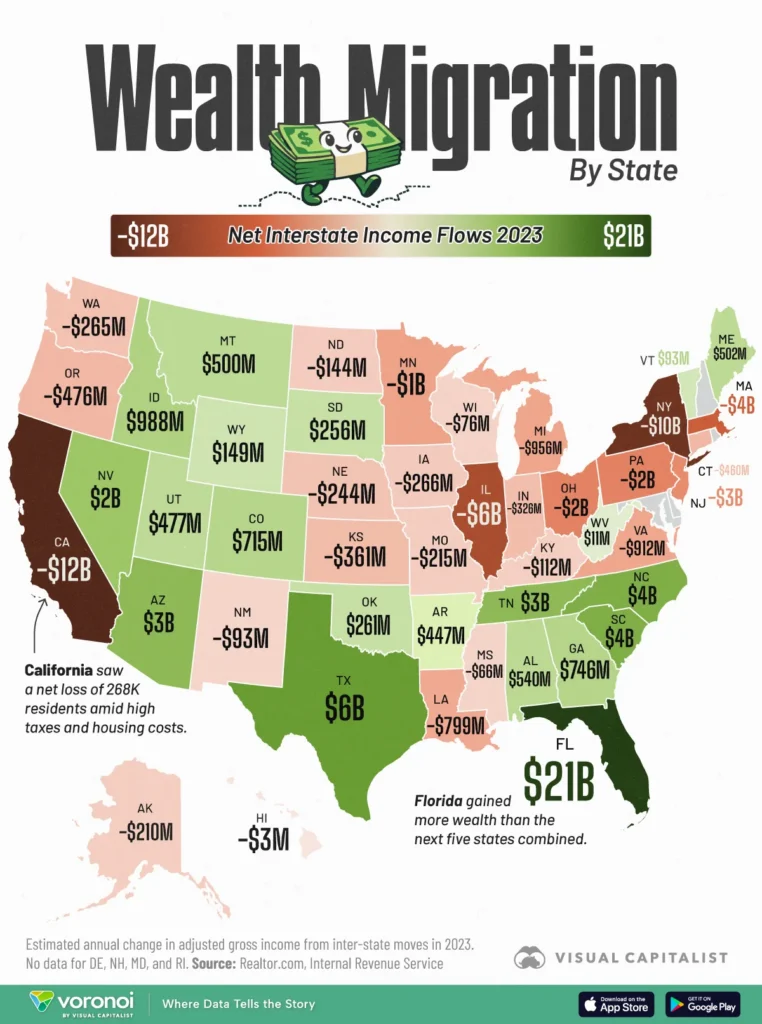
- In 2023, it is estimated that $1 billion of income left Minnesota (chart below).
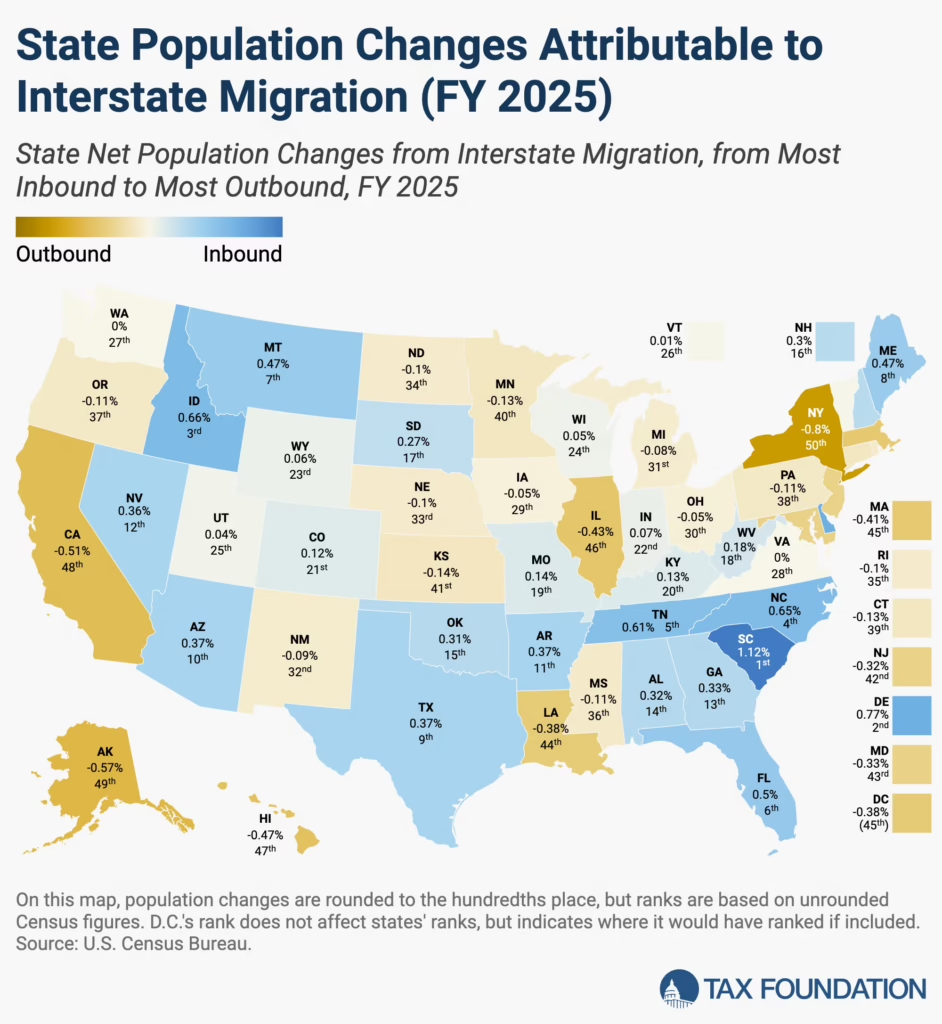
- In 2025, Minnesota ranked 40th out of 50 states for population change, with a decline of 0.13% and a loss of $1.5 billion of adjusted gross income.
What does this mean to you, our client?
We are here to help! There are many ways to avoid a future estate tax burden while still remaining a Minnesota resident, chiefly among them being intra-family gifting (during life) and charitable giving (either during life or at death).
* Via Kayla Payne at Minnesota Law firm Winthrop & Weinstine: “Unlike the federal estate tax system, Minnesota still does not allow ‘portability’ of a deceased spouse’s estate tax exemption to the surviving spouse. It is critical that married couples with assets exceeding $3 million build estate tax planning provisions into their estate plans to ensure the first spouse to die’s exemption is not wasted.”